
If you are unhappy with the appearance of your teeth, both Invisalign and veneers are popular treatments that can help improve your smile, with many people choosing them to achieve their dental goals and improve their self-confidence.
Both treatments are widely used in modern cosmetic dentistry. Tailored to each patient’s individual needs, they can form part of different approaches to improving the appearance of teeth, depending on the outcome individuals are aiming for.
Looking at Invisalign vs veneers, how each treatment works, and what they are designed to correct can make it easier to see which option may suit your particular situation.
Invisalign
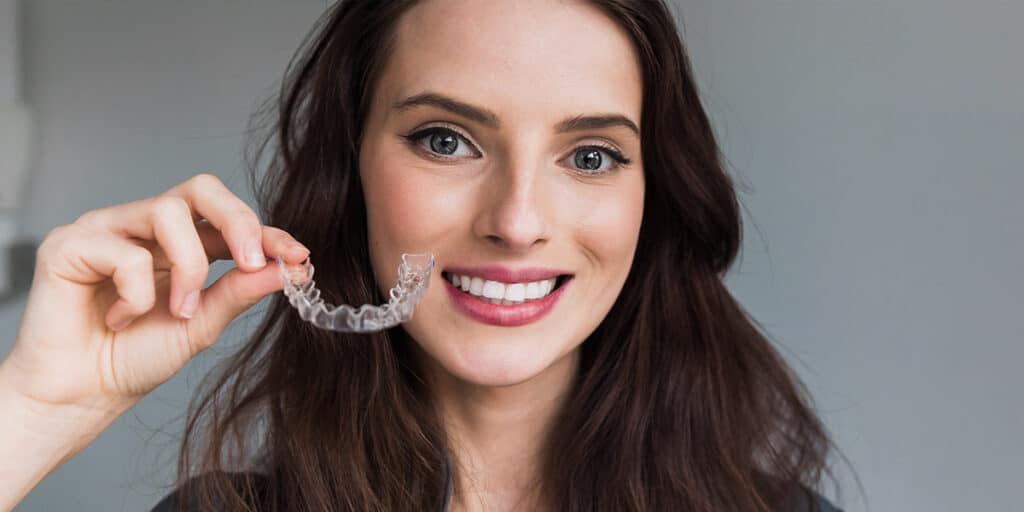
Invisalign is a type of orthodontic treatment used to help improve the alignment of teeth. It is often chosen by people who want a more discreet way to straighten their teeth compared to traditional braces. It is commonly used in both cosmetic and general dentistry to address mild to moderate alignment concerns.
The process usually starts with an initial assessment of the teeth, along with a scan or impression to plan the treatment and use to create a series of custom-made aligners. Each set is worn for a short amount of time (usually a couple of weeks) before moving on to the next, gradually guiding the teeth over time, and progress is checked at regular appointments to make sure everything is moving as expected.
People who are interested in Invisalign treatment often have crowded teeth, gaps between teeth, or minor bite issues. It is also a popular option for adults and older teenagers who prefer a removable option that fits more easily into everyday life.
What Invisalign cannot do
Invisalign is mainly designed for mild to moderate alignment issues, so is not suitable for every type of dental case. More complex orthodontic problems may not be treated effectively with this approach alone, and severe bite problems or cases that require significant jaw correction may also be outside its scope, depending on individual assessment by a dental professional.
For those who are not suitable for Invisalign treatment, dentists might recommend:
- Traditional metal braces
- Lingual braces
- Ceramic braces
- Jaw surgery, in the most complex cases
- A combination of orthodontics and restorative treatments
Invisalign is also not intended to change the size, shape, or colour of teeth, as it focuses on tooth movement rather than cosmetic surface improvements.
Veneers
Veneers are thin coverings that are fitted to the front surface of teeth to improve their appearance. They are commonly used in cosmetic dentistry to help create a more even, brighter, or more uniform smile. Each veneer is made to match the size, shape, and shade of the surrounding teeth.
Veneers are often chosen by people who have chipped, stained, worn, or uneven teeth. They are also an option for those who want to improve the overall look of their smile in a more noticeable way.
The process usually involves an initial consultation to assess suitability and discuss the desired outcome. As part of the preparation, a small amount of enamel is often removed from the tooth surface before impressions are taken. The veneers are then custom-made and fitted at a later appointment, with adjustments made to ensure a comfortable and natural finish.
What veneers cannot do
Veneers do not move teeth or address alignment issues, so they are not used as a substitute for orthodontic treatment to correct the position of the teeth.
They are also not designed to repair teeth with significant damage or decay, and any underlying dental problems will usually need to be treated before veneers can be considered. In addition, veneers do not strengthen teeth and require healthy tooth structure for proper support and long-term success.
Veneers are also a permanent treatment. Once fitted, they cannot simply be removed to return the teeth to their original natural state, as some enamel is usually taken away during preparation.
Choosing the best option for your needs and lifestyle
Choosing between Invisalign and veneers depends on more than just the final appearance of your smile. Although both treatments are used within cosmetic dentistry, they involve different processes, commitments, and long-term considerations, so comparing the two directly can help make it easier to decide which option may suit your needs and lifestyle more closely.
Some of the main differences to think about include:
- What you need treatment for: Invisalign is generally chosen for issues linked to tooth alignment and spacing, while veneers are more commonly used to improve the visible appearance of teeth. The most suitable option will often depend on the main concern you want to address.
- Length of treatment: Invisalign treatment usually takes place over several months, as teeth are gradually moved over time. On the other hand, veneers are normally completed in fewer appointments, making them a shorter treatment process overall.
- Level of patient input required: Patients who are interested in Invisalign need to be committed to wearing their aligners for most of the day, as well as frequent appointments throughout treatment. Veneers involve less day-to-day involvement once fitted, although good oral care is still important.
- Cost: The cost of Invisalign and veneers can vary depending on the complexity of the case and, for veneers, the number of teeth involved. The good news is that many practices offer finance to help spread the cost and make these treatments more accessible.
- Aftercare: Invisalign patients will need to wear retainers after treatment to help maintain the new position of the teeth, while veneers require ongoing care to help protect their appearance and lifespan. In addition, they may eventually need replacing over time.
Both Invisalign and veneers offer cosmetic and functional improvements for your smile, but the right choice will depend on your individual situation, expectations, and dental needs. Speaking with a dental professional can help you decide which treatment is likely to be the most suitable option for your smile.
Combining cosmetic dentistry treatments
For some patients, one cosmetic treatment may not give them the exact result they want. In these situations, dentists may recommend combining different treatments as part of a wider smile makeover to help address several concerns across the course of one treatment plan.
Commonly combined treatments with Invisalign
Teeth whitening is one of the treatments most commonly combined with Invisalign. Many patients choose to whiten their teeth once alignment treatment is complete to improve the overall appearance of their smile. Composite bonding is also frequently combined with Invisalign to make small cosmetic changes to tooth shape, edges, or spacing after the teeth have been straightened.
In some cases, Invisalign may also form part of a larger restorative treatment plan involving crowns, bridges, or dental implants. Straightening the teeth first can sometimes help create a better foundation for these treatments.
Commonly combined treatments with veneers
Veneers are often combined with teeth whitening to help create a more even overall shade across the smile. Whitening treatment may be carried out before veneers are fitted so the surrounding natural teeth match more closely in colour.
Composite bonding may also be used alongside veneers in cases where not every tooth requires a veneer. Some patients may also combine veneers with gum contouring to improve the appearance of the gum line and create a more balanced smile overall.
Make the right decision to get the smile you want
Both Invisalign and veneers can help improve your smile, but the best choice will depend on what you want to achieve and the condition of your teeth. Since every smile is different, taking the time to explore your options carefully can make it easier to choose a treatment that suits both your needs and your lifestyle.
Speaking with our experienced dental professionals at Fulham Road Dental can help you feel more confident about your decision and give you a clearer idea of what to expect from treatment. With the right approach, you can work towards a smile that not only looks better, but also feels right for you personally.
FAQs
Do veneers stain over time?
Veneers can change in appearance over time, depending on the material used. Porcelain veneers are made from a strong, non-porous ceramic, which makes them more resistant to staining and helps them keep their original colour for longer with good care. They are also generally more durable and maintain a stable appearance over time.
Composite veneers are made from a resin material that is more porous than porcelain, so they are more likely to pick up stains over time. As a result, people should be more conscious of staining foods and drinks, and veneers may need more frequent polishing or maintenance to help keep them looking even and natural over time.
Is orthodontic treatment suitable for adults?
Orthodontic treatment can be suitable for adults who want to improve the alignment of their teeth or bite. Many adults choose treatment later in life, and it can be carried out using different options such as fixed braces or clear aligners, depending on individual needs and clinical assessment by a dentist or orthodontist.
Before starting treatment, your dentist will carry out a full examination to check your teeth, gums, and jaw health to help make sure that the mouth is suitable for orthodontic care and allows a tailored plan to be created. Treatment length can vary depending on the complexity of the case and the desired outcome.
Which option looks more natural?
Invisalign usually looks more natural during treatment because it uses clear, thin aligners that are designed to be discreet when worn over the teeth. They are barely noticeable in everyday situations and allow the natural teeth to remain visible while gradually moving them into a better position over time.
Once Invisalign treatment is complete, it will be the patient’s natural teeth that are on show in their new alignment. Veneers can also look very natural once fitted, as they are designed to match the colour and shape of surrounding teeth. However, they cover the teeth themselves immediately so people looking at your smile will not see your natural teeth.