
Composite bonding is a cosmetic dental treatment often chosen for the front teeth due to its aesthetics and the fact that, unlike many other cosmetic dentistry work, it can be completed in just one appointment. The process involves applying a tooth-coloured material to the surface of the teeth and shaping it carefully so it blends in with the natural smile.
Many people hear the term and are unsure what it actually means or what the process involves. The idea of having composite bonding front teeth can raise a lot of questions, especially as these teeth are very visible when talking and smiling.
Understanding how the treatment is carried out and what happens during a dental appointment can help make the whole subject feel clearer and less confusing.
Correcting chips and cracks
Small chips and fine cracks on the front teeth can affect how smooth and even the surface looks. These issues can happen through everyday wear or minor damage.
Common causes include:
- Biting down on hard foods, such as ice or boiled sweets
- Accidental knocks or bumps to the mouth
- Grinding or clenching the teeth, often during sleep
- Using teeth to open packaging or bottles
- General wear over time
Leaving chips or cracks untreated can make them more noticeable over time, especially on the front teeth, where they are easier to see. The edges may feel rough, which can be uncomfortable when the tongue or lips come into contact with them.
While they may seem small at first, areas of damage can become worse with daily use, and are particularly at risk when eating or speaking. Addressing these changes early helps keep the teeth looking normal and reduces the chance of further wear on the affected areas.
Whitening the smile
Over time, front teeth can start to look a little darker or uneven in colour. This is often down to everyday things like tea, coffee, certain foods, or just natural ageing. Because the front teeth are so visible, even small changes in shade can be quite noticeable.
A tooth-coloured material is chosen to closely match the natural teeth, so it blends in as well as possible. It is applied in thin layers and shaped carefully so it follows the natural curves and surface of the tooth.
The shade is carefully chosen to look as natural as possible next to the surrounding teeth. Once it has been set, it is polished so the surface feels smooth and reflects light in a similar way to the rest of the smile.
Strengthening teeth
Front teeth can slowly become weaker over time, often without people really noticing at first.
Teeth are used for biting and speaking throughout the day, which puts pressure on them, but some habits can add extra strain. Grinding or clenching the teeth, especially at night, can gradually wear them down, while acidic foods and drinks can also soften the outer surface, making it easier for wear to develop. Even small chips or past damage can leave certain areas feeling less solid than before.
A tooth-coloured material can be placed onto these areas and shaped to support the natural tooth. It helps reinforce parts that have become thinner or more fragile, while still blending in with the rest of the tooth so it looks natural.
Creating a more even-looking smile
Front teeth are often very visible when talking and smiling, so even small differences between them can stand out. This might include slight changes in shape, size, or alignment that make the smile look less balanced.
Composite bonding can be used to carefully build up specific areas of the teeth so they look more uniform. The material is matched to the natural tooth shade and shaped by hand so it blends in with the surrounding teeth.
The result is a more consistent appearance across the front teeth, with smoother edges and a more balanced look when the smile is seen as a whole.
Reducing sensitivity
Tooth sensitivity in the front teeth can be quite uncomfortable, especially when eating or drinking something hot, cold, sweet, or acidic. It often happens when the protective enamel becomes thinner or when small areas of the tooth are more exposed than they should be.
Composite bonding can help by covering these sensitive areas with a smooth layer that sits over the surface of the tooth. This added layer acts like a shield, helping to reduce how much the tooth reacts to changes in temperature or certain foods and drinks.
By covering exposed parts of the tooth, composite bonding can make everyday things like enjoying a cold drink or a warm meal feel much more comfortable.
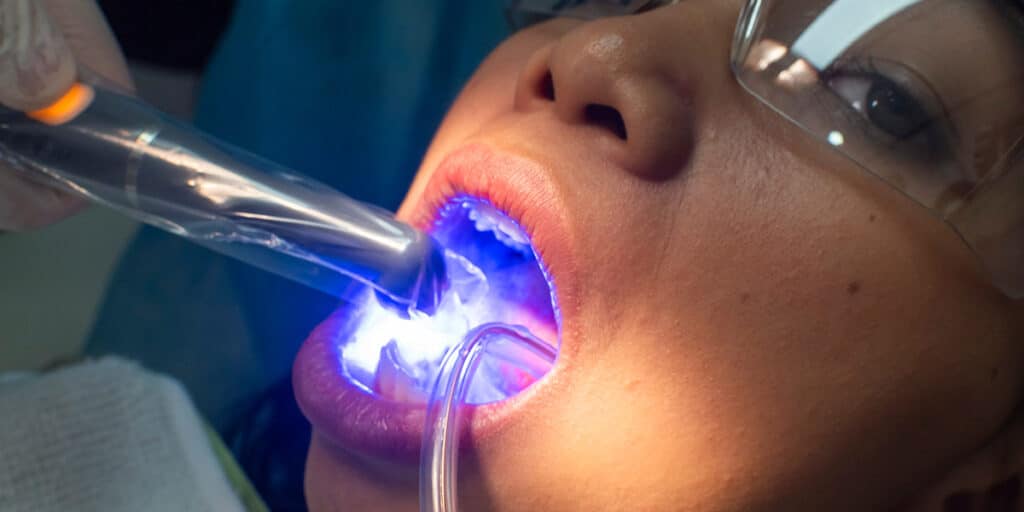
Choosing composite bonding for the whole smile
Composite bonding doesn’t have to be limited to just one or two front teeth. In some cases, it can be used across several teeth to help create a more balanced and consistent appearance.
It can make sense to consider this approach when:
- A few teeth have small chips or worn edges that affect their shape
- The teeth vary slightly in length, width, or proportion
- There are noticeable differences in shade between teeth
- Wear or minor damage is spread across more than just the front teeth
- A more uniform smile line is desired
When composite bonding is used across multiple teeth, each tooth is individually prepared and the material is applied in layers to build up the correct shape and contour. The dentist carefully adjusts the anatomy of each tooth so they sit in harmony with one another, paying attention to things like symmetry, edge position, and how the teeth meet when smiling and biting.
Composite bonding in combination with other treatments
Composite bonding is sometimes carried out alongside other dental treatments to help improve the overall appearance and condition of the smile. In many cases, it forms part of a wider treatment plan rather than being used on its own.
Teeth whitening
Teeth whitening is often carried out before composite bonding. This is because the bonding material is colour-matched to the natural teeth at the time of treatment. Whitening first allows the composite bonding to be matched to a lighter shade if that is the preferred result.
Orthodontic treatment
Composite bonding can also be combined with orthodontic treatment, such as braces or clear aligners. Once the teeth have moved into a better position, bonding may be used to improve small details like uneven edges, minor gaps, or slight differences in tooth shape.
Restorative dental treatment
Composite bonding may also be combined with restorative treatments where teeth have been repaired or rebuilt with the help of treatments like crowns, dentures, or root canal treatment. After the tooth structure has been restored, bonding can help improve the final shape and appearance so it blends in more naturally with the surrounding teeth.
Using composite bonding alongside other treatments allows different parts of the smile to be addressed together, helping the final result look more natural and consistent overall.
Deciding if composite bonding is right for you
Composite bonding can be a good option for people who want to make small but noticeable improvements to their smile without changing the natural look of their teeth. As every smile is different, the treatment can be adjusted to suit each person’s needs and the condition of their teeth.
For some people, the focus may be on improving the appearance of a few teeth, while others may want a more balanced look across the whole smile. The right approach will depend on factors such as tooth condition, overall oral health, and the desired result.
Speaking with our team at Fulham Road Dental can help give a clearer idea of whether composite bonding is suitable and what kind of result may be possible. Having a full understanding of the treatment can also help you feel confident about making the right decision for your smile.
FAQs
Can composite bonding be removed?
Composite bonding can usually be removed by a dentist if needed. The material is carefully polished away from the tooth surface using dental tools designed to avoid unnecessary damage. Removal should always be carried out professionally, as trying to remove bonding at home could scratch or weaken tooth enamel permanently.
In many cases, the tooth underneath remains largely unchanged because composite bonding often requires very little preparation before treatment. After removal, some people choose to have new bonding placed, while others prefer to leave the teeth as they are. A dentist can explain the most suitable option for each smile.
Will I be able to get the bonding repaired if it chips?
Composite bonding can usually be repaired if a small chip develops over time. Dentists are often able to add new material onto the damaged area and reshape it so it blends in with the rest of the tooth. Minor repairs are straightforward when the surrounding bonding remains in good condition.
It is important to have chipped bonding checked as soon as possible, especially if rough edges are causing discomfort. Leaving damage untreated may allow the chipped area to become noticeable or wear further. A dentist can assess the bonding and decide whether a repair or replacement would be suitable afterwards.
What’s the difference between composite bonding and veneers?
Composite bonding uses a tooth-coloured resin that is shaped directly onto the teeth during treatment. Veneers are thin shells, usually made from porcelain, which are created separately before being fitted onto the front surface of the teeth. Both treatments aim to improve appearance, but they are carried out differently overall.
Composite bonding often involves very little preparation of the natural tooth, while veneers may require a small amount of enamel to be removed beforehand. Bonding can usually be completed in one appointment, whereas veneers are normally made in a dental laboratory before fitting. The most suitable option will depend on the condition of your teeth, the results you are looking to achieve, and whether you want a permanent solution.