
Choosing how to replace a missing tooth is not always as straightforward as it first seems. There are different ways to approach treatment, and what works for one person may not be right for someone else. The number of teeth involved is one of the main factors that can shape the treatment plan and the final result.
Dental implants can be used to replace one missing tooth or several. A single tooth implant may be enough when one tooth needs replacing, while multiple missing teeth may need a different approach. However, treatment is not always the same, so understanding both can make it easier to know what to expect if you’re considering getting artificial teeth.
Why you should replace a missing tooth
A missing tooth can affect more than just the way your smile looks. Even losing one tooth can change the way your teeth meet, how you chew and how comfortable your mouth feels. Replacing the gap can help restore the function of your teeth while supporting your overall oral health.
There are several reasons why replacing a missing tooth may be beneficial, including:
- Making eating more comfortable: A missing tooth can make it harder to bite and chew certain foods, particularly if it is in an area that takes a lot of pressure. Replacing it can help you chew more comfortably and use your teeth in a more balanced way.
- Restoring confidence in your smile: Gaps caused by missing teeth can affect how you feel about smiling or speaking, especially when the missing tooth is visible, so a replacement tooth can help create a more natural-looking smile.
- Stopping nearby teeth from moving: When there is a space left by a missing tooth, the surrounding teeth can gradually shift position, which can affect your bite and may make it more difficult to keep your teeth properly aligned.
- Supporting your bite: Your teeth work together as a team, so losing one tooth can affect how pressure is distributed when you bite and chew. Replacing the missing tooth can help maintain a more balanced bite.
- Helping protect your jawbone: The roots of your teeth help keep the surrounding bone stimulated and healthy. When a tooth is lost, the bone in that area can start to reduce over time. An implant can help replace the missing root and support the jaw.
- Protecting your remaining teeth: Filling the gap can help reduce extra pressure on your other teeth and make it easier to maintain good oral health in the future.
The right way to replace a missing tooth depends on your individual circumstances, including your oral health, the location of the gap and the type of result you are hoping to achieve. Speaking to a dentist can help you understand the options available and decide on the most suitable approach.
Single tooth implants
A single implant is a way to replace one missing tooth with a replacement that looks and feels natural. People can lose one tooth for a number of reasons, including decay, injury, gum disease, or a tooth becoming too damaged to save. Even when only one tooth is missing, it can affect the way your bite feels and how your teeth work together.
One of the biggest benefits of a single tooth implant is that it can help protect the teeth around the missing tooth. Unlike a traditional bridge, an implant does not normally need the neighbouring teeth to be altered or used as support, which helps keep more of your healthy natural teeth in place.
For some people, an implant may be a better choice because, as well as replacing the missing tooth independently, it can also make biting and chewing feel more secure because it is supported within the jaw rather than attached to nearby teeth. The most suitable option will depend on your individual circumstances and dental needs.
It’s also worth keeping in mind that not everyone is going to be suitable for a dental implant right away. The amount of bone available, the health of your gums, and the condition of the surrounding teeth will all be taken into consideration before treatment starts. An assessment with a dental professional can help determine whether an implant is the right choice and if any preparation is needed first.
Multiple dental implants
Multiple dental implants may be an option when several teeth are missing or need to be replaced. This can happen due to issues such as advanced decay, gum disease, injury or teeth that have become too damaged to restore. Replacing several missing teeth can help improve how your smile looks and give you back the confidence to show your teeth to the world again.
The number of implants a person needs will depend on the number of teeth being replaced and their position in the mouth. The best solution for some could be individual implants for each missing tooth, while others may benefit from an implant-supported bridge, which uses two or more implants to hold several replacement teeth in place.
For people who have lost most or all of their teeth in one arch, full-arch implant treatments such as All-on-4 or All-on-X, which use several implants to support a complete set of replacement teeth, may also be considered. These can provide an alternative to traditional dentures for those who would rather have a fixed solution.
The right approach will depend on your individual situation, including the health of your gums, the amount of available bone and the number of teeth that need replacing. A thorough assessment can help your dentist recommend the most suitable option based on your needs and goals.
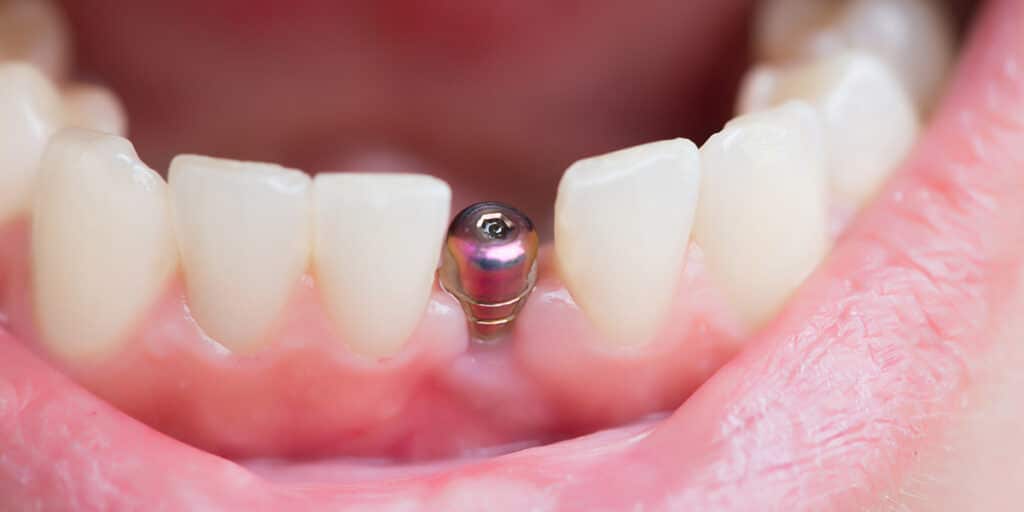
The dental implant process
Once you have had your assessment and your treatment plan has been created, your dentist will use digital scans, X-rays or 3D imaging to assess your jawbone and the surrounding structures. This provides detailed information about the area being treated and helps ensure the implants are planned in the most suitable position.
Some patients may need a bone graft before an implant can be placed. This is usually needed when there is not enough healthy bone available to provide the support an implant requires. A bone graft can help rebuild the area and improve the foundation for implant placement.
Once you are fully ready for the implant process to begin, it usually involves:
Implant placement: The implant is placed into the jawbone to act as a replacement for the missing tooth root and is positioned carefully to provide a stable base for the final restoration. The number of implants placed will depend on whether you are replacing one tooth, several teeth or a full arch.
Healing: After the implant has been placed, it needs time to heal and bond with the surrounding bone. This process allows the implant to become stable and creates a strong foundation for the replacement tooth or teeth. The length of the healing period can vary depending on your individual circumstances and the type of treatment you are having.
Final restoration: Once the implant has fully integrated with the jawbone, the final restoration can be fitted. This may be a crown for a single missing tooth, a bridge for several missing teeth or a full arch restoration for more extensive tooth loss. The restoration is designed to look natural and function comfortably alongside your existing teeth.
Follow-up appointments: After your final restoration has been fitted, follow-up appointments allow your dentist to check your progress and make sure everything is working as expected. These appointments also provide an opportunity to monitor the health of your gums, the condition of the implant and the overall success of your treatment.
The overall treatment time varies depending on the number of implants needed, whether additional procedures are required and how quickly your mouth heals. Some treatments can be completed within a few months, while more complex cases may take longer. Your dentist will explain the expected timeline based on your individual treatment plan.
Start planning your dental implant treatment with Fulham Road Dental
Missing teeth can affect everyone differently, which is why there is no single approach that works for every patient. A single gap may only require one implant, while several missing teeth may need a more tailored solution. Understanding the differences between these options can help you have a more informed conversation with your dentist about the treatment that best fits your situation.
At Fulham Road Dental, every dental implant treatment is planned individually, with options available for single implants, multiple implants and more complex cases. Their team can guide you through the available choices, explain what to expect and help you understand the most suitable approach for your smile. If you are considering dental implants, booking a consultation is the first step towards exploring your options.
FAQs
How painful is dental implant treatment?
Dental implant treatment is not usually painful because your mouth will be numbed with local anaesthetic during the procedure. You may notice some pressure or movement while the implant is being placed, but most people find this manageable. Once the anaesthetic wears off, some soreness and swelling can be expected.
The level of discomfort after treatment can vary from person to person, but it is often compared to having a tooth removed. Any tenderness can usually be eased with pain relief and should gradually settle as your mouth heals. Following your dentist’s aftercare advice can also help you recover comfortably.
Are dental implants easier to clean than dentures?
Dental implants can be easier to look after than dentures because they stay fixed in your mouth and can be cleaned in a similar way to natural teeth. You can brush and care for them as part of your usual routine, without needing to remove them for cleaning each day.
Dentures need to be taken out and cleaned separately, which some people find less convenient. Implants can feel more like natural teeth, but they still need regular brushing, flossing and dental check-ups. Your dentist can show you the best ways to care for your implants and help keep them in good condition.
What happens if I can’t have dental implants?
If dental implants are not suitable for you, there are other ways to replace missing teeth. Your dentist may recommend options such as bridges or dentures, depending on your oral health, how many teeth are missing and the result you would like to achieve. In some cases, extra treatment may help make implants possible.
The best alternative will depend on your individual situation and what feels right for you. Your dentist will look at your teeth, gums and jaw before explaining the options available. Even if implants are not the right choice, there are treatments that can help improve the appearance and function of your smile.