
Invisalign is a clear way of straightening teeth without using metal braces. Invisalign has become a popular choice for people who want to improve their smile without it being too noticeable in everyday life.
It works using a series of thin, custom-made plastic aligners that fit closely over your teeth. You wear each set for a short period before moving on to the next one, with each aligner making small, gentle changes to the position of your teeth. Because they can be taken out when you eat, drink, and clean your teeth, they often feel easier to live with than fixed braces.
As more people explore ways to straighten their teeth discreetly, it is useful to understand what Invisalign is designed to treat, as well as when it might not be the right fit.
Severe bite issues
Severe bite problems are often more difficult than they first appear, especially when the upper and lower jaws do not fit together properly. In cases involving a strong overbite or underbite, the issue is usually linked to how the jaws have grown over the years, rather than simply where the teeth are sitting now, which can make treatment harder because moving the teeth by themselves is not always enough to correct the bite.
Crossbites can also become more serious when they affect several teeth or change how both sides of the mouth meet together. In these cases, the bite may feel uneven or uncomfortable, and the type of movement required can be more exact than what clear aligners are normally designed to manage on their own.
Open bites caused by the way the jaw has developed can also be difficult to treat. When there is a gap between the upper and lower teeth because of jaw position instead of tooth position, a different orthodontic treatment may be needed to create a stable and long-lasting result.
Severe crowding or spacing
When there is not enough room in the mouth for all the teeth to sit comfortably, they can become very tightly packed together. This may lead to teeth being pushed forward, sitting at awkward angles, or turning so much that they overlap each other.
In more extreme cases, this level of rotation or overlap can make it harder to guide each tooth into the right position in a controlled and predictable way using clear aligners alone.
On the other hand, some people have the opposite problem, where there are large gaps between the teeth. When these spaces are wide, closing them often involves moving teeth quite a long distance. This needs careful planning to make sure the teeth move evenly, and the final bite stays balanced and stable.
Complex tooth movements
Some tooth movements are more complex and need a higher level of control than others. This is especially true when a tooth has to move a long way up or down in the mouth. These larger vertical movements are not just small adjustments. They need careful planning so the tooth moves in a steady way and ends up in a stable position that works well with the rest of the bite.
In other cases, the challenge is not only moving the top of the tooth, but also guiding the root into a new position. This means the whole tooth has to shift through the bone in a controlled way. It is a more detailed process, as the final position of the root is just as important as how the tooth looks on the surface.
There are also times when a tooth needs a significant change in angle, known as torque adjustment. This affects how the tooth leans and how it fits against the opposing teeth. Because it involves precise control over both position and direction, it is one of the more complex types of movement in orthodontic treatment.
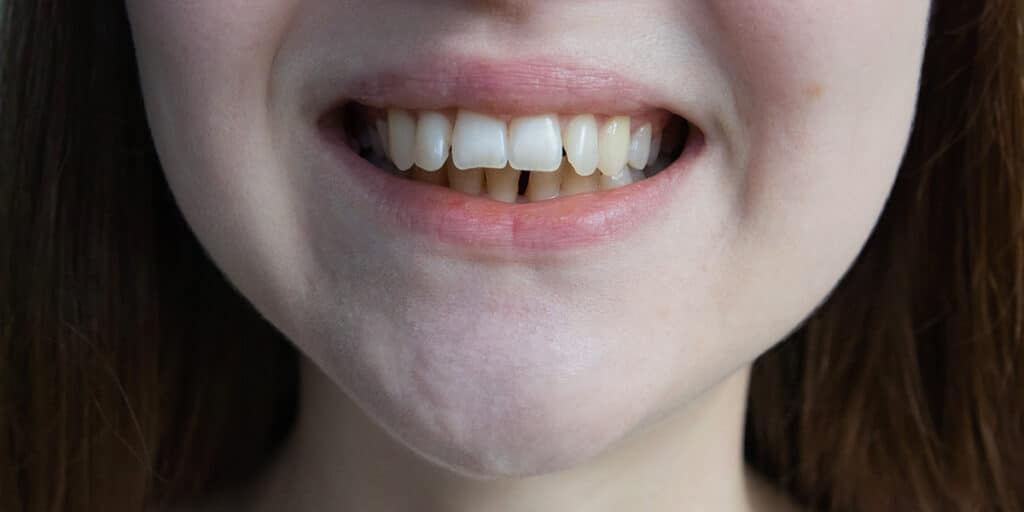
Skeletal or jaw-related issues
Some bite and alignment problems come from how the jaws have grown and developed, rather than just how the teeth are positioned.
When the upper and lower jaws do not sit well together, it can affect the bite in a noticeable way, making it feel uneven or uncomfortable when chewing. It can also influence how the teeth meet and how the smile and facial profile look overall. In these cases, moving teeth on their own is often not enough because the main issue sits in the underlying jaw position.
In more serious cases, treatment may involve orthognathic surgery, which is jaw surgery used to move the upper jaw, lower jaw, or sometimes both into a better position. This is usually advised when the difference between the jaws is too large to be corrected with orthodontic treatment alone, although orthodontic treatment is often still needed after surgery to improve the bite and make sure the teeth fit together properly for long-term stability.
Other orthodontic treatments
When Invisalign is not the most suitable option, other types of braces may be recommended depending on how complex the issue is and what needs to be corrected. Each option works in a slightly different way, but they all aim to move the teeth into a healthier and more balanced position over time.
- Metal braces use small brackets fixed to the teeth with a thin wire running through them. The wire is adjusted regularly to gently guide the teeth into better alignment.
- Ceramic braces work in a similar way to metal braces, but the brackets are made from tooth-coloured materials. This helps them blend in more with the natural colour of the teeth, making them less noticeable.
- Lingual braces are fitted to the inside surface of the teeth, so they sit behind the teeth and are hidden from view when smiling or talking. They still use brackets and wires, but they are placed on the tongue side of the teeth.
These options are often chosen when more detailed or controlled tooth movement is needed. Metal braces tend to be used for a wide range of cases, including more complex ones, due to their strength and flexibility. Ceramic braces are often chosen for a more discreet appearance while still offering similar control. Lingual braces provide a hidden option, although they can take a bit more time to get used to because of their position behind the teeth.
Getting the right orthodontic treatment for your needs
Finding the right orthodontic treatment always comes down to understanding your teeth, your bite, and how everything works together. No two smiles are the same, so the most suitable approach will depend on a proper look at what is going on rather than a one-size-fits-all answer.
At Fulham Road Dental, our orthodontists take the time to assess each case carefully before recommending any treatment. They look at how the teeth fit together, how the bite functions, and what kind of movement would be needed to achieve a healthy and stable result. This helps ensure that any plan is tailored to the individual rather than based on assumptions.
With the right advice and a clear understanding of your options, it becomes much easier to feel confident about the next steps and choose a treatment that is appropriate for your long-term dental health.
FAQs
How do orthodontists decide which treatment is best?
Orthodontists look at how complex the problem is before recommending a treatment. They assess factors such as bite position, jaw alignment, tooth movement, and overall stability to decide which option is most suitable. Some cases need more precise control than others, especially when major movement or correction is involved during treatment.
They also consider how predictable the final result is likely to be with each treatment option. In some situations, clear aligners may work well, while more complex cases may need fixed braces or additional procedures. The goal is to choose a treatment that creates a comfortable bite, healthy tooth positioning, and stable overall results.
Is Invisalign suitable for large gaps between teeth?
Invisalign can be suitable for some gaps between teeth, particularly when the spaces are small or moderate, and the movement needed is relatively straightforward. Clear aligners are designed to gradually bring teeth closer together over time while keeping the bite balanced. Treatment success depends on spacing size, tooth position, and overall bite alignment.
Larger gaps can be more difficult to treat because the teeth may need to move a greater distance. In some cases, this requires more precise control than clear aligners alone can provide comfortably. Orthodontists will assess how stable the final result is likely to be before recommending Invisalign or another orthodontic treatment instead for patients.
Can braces fix jaw alignment problems?
Braces can improve some jaw alignment problems by moving the teeth into better positions and helping the bite fit together more evenly. In milder cases, this may be enough to improve how the upper and lower jaws work together. The type of result possible depends on how severe the jaw difference is overall.
More serious jaw alignment problems are often linked to the way the jaws have developed rather than tooth position alone. In these situations, braces may still be part of treatment, but additional orthodontic appliances or jaw surgery could also be needed. Orthodontists assess each case carefully to decide the most suitable and stable treatment approach available.