
Whether you see a chipped tooth in the mirror one day, or something happens that you instantly know has affected your teeth, it’s something that can really affect your appearance and, in turn, your confidence. They can also be signs of underlying dental problems that need to be taken care of before the chips themselves can be fixed.
Only a dentist can assess the damage and decide on the best course of action to treat and restore your smile. From minor options to more advanced restorative treatments, the right solution will depend on the size, location, and cause of the chip.
Types of chips
Chipped and broken teeth can present in different ways, so identifying the type of chip helps a dentist decide on the course of action.
Minor chips
The most minor of chips are those which only affect the outer enamel of the tooth and do not usually cause pain. They are usually small and may appear as a rough or uneven edge. Whilst they are mainly a cosmetic issue, smoothing or repair might still be recommended, especially if someone is in pain.
Fractured or broken cusp
This type of damage affects areas that have weakened over time around the raised points on the chewing surface of the back teeth, known as the cusps. A fractured or broken cusp does not always cause pain, but it can reduce the strength of the tooth and lead to further breakage.
Split tooth
A split tooth is a more serious condition where a crack extends from the surface down towards the root, effectively dividing the tooth into sections. This can cause discomfort when biting and may get worse if left untreated, so early assessment is important to try and preserve as much of the tooth as possible.
Tooth break with exposed nerve
In more severe cases, the break extends deep into the tooth and exposes the inner pulp where the nerve is located, leading to pain and sensitivity, as well as a higher risk of infection. As a result, prompt dental treatment is needed to protect the tooth.
Root fracture
A root fracture occurs below the gum line and may not be immediately visible. Symptoms can be subtle at first, but can develop to pain when biting or swelling in the surrounding gum tissue. Because this type of fracture affects the tooth’s foundation, it can involve more complex treatment.
What causes chipped teeth
Chips can happen in different situations and are not always the result of a single obvious event. These can include:
- Biting down on something hard, like ice, sweets, or unpopped popcorn, creating sudden force that causes a small piece of the tooth to break away
- Injuries and accidents, including falls, knocks to the face, or contact during sports, especially if a person doesn’t wear a mouthguard
- Teeth grinding, also known as bruxiusm, which gradually wears down the enamel over time, making teeth more fragile and likely to chip at any given moment
- Tooth decay that weakens the structure of a tooth, making it less stable and more likely to break or chip under pressure
- Large fillings or previous dental work reducing the overall strength of a tooth, increasing the risk of chipping, especially when eating harder foods
- General wear and tear over time can thin the enamel, making teeth more vulnerable to chips and cracks as you age
Because even minor damage can leave the tooth more exposed and at risk of further wear, it’s important to have any suspected chip checked by a dentist. Early assessment can help prevent the problem from becoming more serious and ensure the tooth is properly protected.
Why you shouldn’t ignore chipped teeth
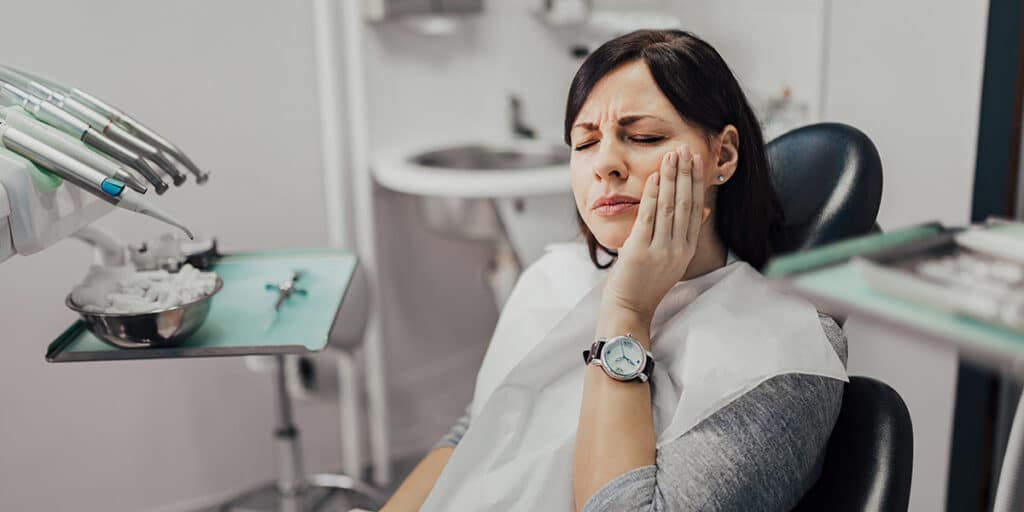
Even though small chips may look minor at first, they can make the tooth more likely to be damaged over time. A chip can weaken the tooth’s structure, increasing the chance of damage, like bigger chips or cracks, especially when chewing.
Damage to the enamel can expose the inner layers of the tooth, leading to sensitivity or discomfort when eating and drinking, particularly with hot, cold, or sweet foods.
In some cases, bacteria can enter through the damaged area. This can increase the risk of decay or infection, which may require more complex treatment if it is not addressed early.
Chipped teeth can also affect how your bite fits together. Changes in the shape of a tooth may place uneven pressure on surrounding teeth, which can lead to further wear or discomfort over time.
Treatments to restore chipped teeth
For small chips, a dentist may simply smooth the rough edge or use a tooth-coloured filling to rebuild the missing area to help restore the natural shape of the tooth and improve its appearance.
For more noticeable chips, dental bonding is often used. This involves applying to resin material to the tooth, which is shaped and hardened to match the look of the surrounding teeth.
A crown might be recommended if a larger part of the tooth is missing. A crown covers the whole tooth, helping to restore strength, function, and appearance.
In cases where the chip has affected the inner part of the tooth, root canal treatment may be needed to remove damaged tissue and protect the tooth from further issues before it can be restored.
The choice of treatment will be based on a full dental assessment to make sure the tooth is repaired safely and effectively.
Chipped teeth in children
Chipped teeth are fairly common in children, but the approach to treating them can be different from treating adults, especially when milk teeth are involved.
If a child chips a milk tooth, treatment is often more conservative. In many cases, small chips may only need smoothing or keeping an eye on, as these teeth will eventually fall out naturally. However, a dentist will still check the tooth to make sure there is no damage to surrounding tissues or signs of infection.
When a permanent tooth is chipped, the focus is on restoring and protecting it for the future. Treatment options are similar to those used for adults, such as smoothing, fillings, or bonding, depending on the size of the chip.
Children may also be more likely to chip teeth during active play or sports, so prevention is an important part of care. Dentists may advise young patients to wear mouthguards for contact sports to reduce the risk of injury.
Fix your chipped teeth and feel confident again
Chipped teeth can vary widely in how they look and how they affect your oral health, and understanding the cause and type of damage helps guide the most suitable approach to treatment.
Modern dental techniques allow chipped teeth to be repaired in a way that restores both function and appearance. With early assessment, it is possible to prevent more problems and get a natural-looking result.
If you are concerned about a chipped tooth, seeking professional advice is the best next step, so get in touch with us at Fulham Road Dental. Our dentists can assess the situation and recommend a tailored solution to help restore your smile.
FAQs
Will a chipped tooth heal on its own?
A chipped tooth will not heal on its own because enamel does not repair like other parts of the body. Once the surface is damaged, it stays that way unless it is treated by a dentist. Small chips may not cause pain, but they can still weaken the tooth over time.
Larger chips can expose inner layers of the tooth, which may lead to sensitivity or discomfort. Without treatment, the damage can get worse and increase the risk of further breakage or infection. A dentist can assess the chip and suggest the most suitable option to protect the tooth.
When should I see a dentist after chipping a tooth?
It is best to see a dentist as soon as possible after chipping a tooth, even if the damage seems small. Early assessment can help prevent further problems and reduce the risk of pain or infection. A dentist can check the extent of the damage and decide if treatment is needed.
If you feel pain, sensitivity, or notice sharp edges, you should seek dental care without delay. Larger chips or cracks may expose the inner part of the tooth, which needs prompt attention. Quick treatment can help protect the tooth and prevent the issue from becoming more serious.
Are there ways to protect my teeth from chipping again?
There are ways to reduce the risk of chipping your teeth again by taking simple precautions. Avoid biting hard foods such as ice, nuts, or hard sweets, as these can put pressure on the teeth. Using your teeth to open packaging should also be avoided, as it can cause damage over time.
Wearing a mouthguard during sports or if you grind your teeth at night can help protect them from impact and pressure. Regular dental check-ups can also help spot weak areas early. Keeping teeth strong through good oral hygiene may lower the chance of future chips forming over time.