
Losing most or all of your teeth can change things you once took for granted, and you suddenly find eating your favourite foods, speaking clearly, or simply smiling without thinking twice become more difficult. Full-mouth dental implants are designed to restore more than missing teeth, helping you get back to a smile that feels comfortable, secure, and like your own.
It is also a big decision, so it is natural to have questions before committing to treatment. The idea of replacing an entire set of teeth can feel overwhelming, but understanding what is involved can make the process seem much less daunting.
Full-mouth implants do not always mean replacing every tooth with an implant
The phrase “full-mouth implants” can make it sound as though every missing tooth needs its own implant. Fortunately, that is not usually how full-arch treatment works. Instead, a smaller number of implants can be used to support a complete set of replacement teeth, making it possible to restore an entire arch without placing an implant for every tooth.
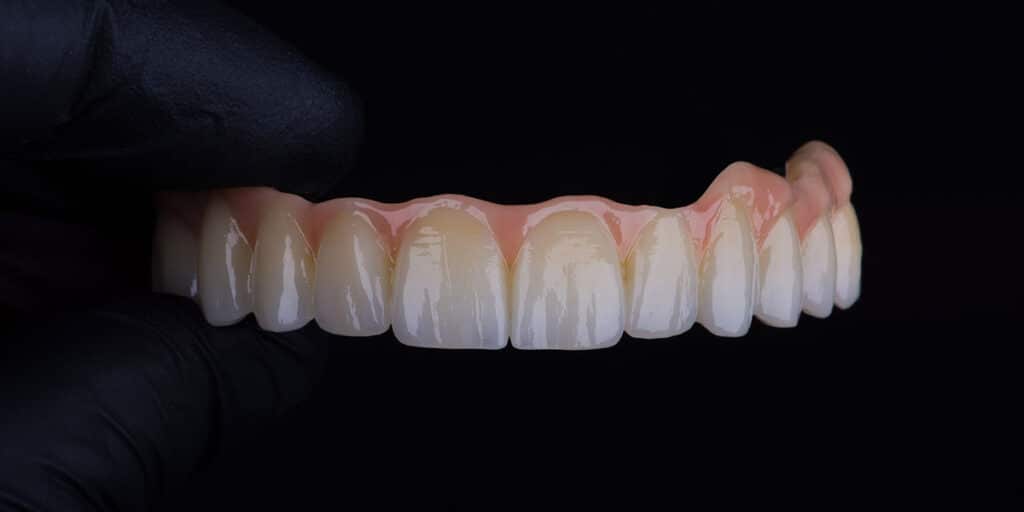
This is quite different from replacing individual missing teeth, where each implant supports its own crown. With full-arch treatment, the implants are carefully positioned along the jaw so they can provide support for a larger restoration, and the replacement teeth are joined together and secured to these implants to give the whole arch a stable foundation.
This type of treatment is often referred to as All-on-4 or All-on-X treatment, with the exact number of implants needed varying depending on the individual case. Fewer implants can mean a simpler treatment process than replacing every tooth individually, and may involve less surgery and fewer components, which can also make the overall treatment more affordable.
However, some people may still prefer individual implants because they allow each missing tooth to be replaced separately, which can offer a more customised approach to restoring their smile. The best and most suitable option will depend on your individual circumstances, including how many teeth are missing and the condition of your remaining teeth and jaw.
What happens to your existing teeth
If you are considering full-mouth dental implants, it does not automatically mean all of your remaining teeth need to be taken out. Some may be damaged but still worth saving, while others may be too badly affected to restore successfully. The important thing is to look at each tooth on its own rather than assuming they all need the same treatment.
Your dentist will take things such as the condition of each tooth, your gums and the bone supporting them into account, and they may also use X-rays or scans to get a better understanding of what is happening beneath the surface. From there, they can decide which teeth have a good chance of staying healthy and which are unlikely to be reliable in the long term.
There is a good reason not to remove teeth simply because implants are being considered. If a natural tooth can be treated successfully, keeping it means keeping your own tooth rather than replacing it with an artificial one. Removing a tooth that could have been saved can also lead to changes in the surrounding bone, so extraction should be carefully considered rather than treated as an automatic part of the process.
This is why a thorough assessment matters before any major decisions are made. Taking the time to understand the condition of your existing teeth gives your dentist the chance to consider what can be preserved, what may need to be removed and what treatment is likely to give you the best long-term result.
Full-mouth implants vs. dentures
Full-mouth implants and dentures can both replace a complete set of missing teeth, but they can feel quite different in everyday life. Implants are secured in the jaw, while dentures sit on the gums. This can affect everything from eating and speaking to how confident you feel when laughing, talking or going about your day. The differences are not only about whether the teeth can be removed, but also include:
- Chewing: Implant-supported teeth generally provide a more secure biting surface, so there is less concern about the teeth moving while eating. Dentures can work well for many foods, although some people find certain harder or stickier foods more challenging.
- Stability: Because implants are anchored in place, the replacement teeth are less likely to shift during everyday use, whereas dentures can move slightly, particularly if the fit changes over time.
- Speech: Both options will feel slightly odd in the mouth at first. Dentures can sometimes affect speech while you get used to their shape and position, whereas implant-supported teeth are held more firmly in place.
- Day-to-day confidence: Some people feel more confident with implants because they do not have to think about their teeth moving or coming loose. Others are perfectly comfortable wearing dentures and prefer having a solution they can remove.
- Cleaning: Implant-supported teeth stay in the mouth and need careful daily cleaning around the replacement teeth and implants. Dentures need to be removed and cleaned separately, with regular attention to both the dentures and your mouth.
The right choice can depend heavily on your lifestyle and priorities. Someone who wants teeth that feel as secure as possible during meals or social situations may prefer implants, while someone who would rather have a less involved treatment process or the ability to remove their teeth may favour dentures.
There is no universally better option. Your oral health, the condition of your jaw, budget, tolerance for treatment and personal preferences can all influence the decision. What suits one person may not suit another, so the most appropriate choice is the one that fits your circumstances and expectations.
Knowing what your new teeth will actually look like
Replacing a full set of teeth is a big change, so it’s understandable that you might want to get an idea of what your new smile will actually look like, which is where careful smile design comes in. Rather than simply choosing a set of replacement teeth, your dentist can plan how they should look alongside the rest of your face.
There is more to creating a natural-looking smile than choosing a tooth colour. Your facial shape, the way your lips sit, your gum levels and the size and shape of your teeth all play a part. Even the shade needs some thought; the brightest possible shade will not necessarily be the most natural-looking choice for you.
Digital scans and photographs can help your dentist plan the shape and position of your new teeth in detail. In some cases, temporary teeth can also be used before the final ones are made, which gives you a chance to see and feel how the proposed teeth look in your mouth. It also allows for changes to be considered before the final restoration is made.
The aim is for your new teeth to look like they belong to you, rather than giving you a standard “implant” smile. It is worth remembering that implants cannot recreate every detail of natural teeth or guarantee a particular look. Good planning can help achieve a result that looks balanced and suits your features, while keeping your expectations realistic.
| Element | How they do it |
| Shade matching | Dental technicians carefully match the colour of an implant crown to the surrounding teeth, thinking about shade, tone, and translucency. |
| Materials | Porcelain and zirconia are often chosen, as they can be engineered to replicate the appearance and light-reflecting qualities of natural tooth enamel. |
| Detailed shaping | The crown is individually designed to replicate the size, shape, and contours of surrounding teeth. |
| Surface texture | Subtle details like small grooves, ridges, and variations in the surface can be recreated to give the crown a more natural appearance. |
| Gum and emergence profile | The crown is designed to emerge from the gum in a way that resembles a natural tooth, helping the implant blend into the surrounding tissues. |
Full-mouth implants as a permanent solution
Dental implants are often described as a permanent solution, but that does not mean they will last forever without any care or attention. The implants themselves are designed to provide long-term support in the jaw, while the replacement teeth attached to them are separate and can eventually need repairing, adjusting or replacing.
It is helpful to think of the implant as the foundation and the replacement tooth as the part you see and use every day. The implant fixture sits in the jaw, while the replacement teeth are attached to it. The fixture can remain in place for many years, but the teeth are exposed to normal wear from eating and biting, so they can be more likely to need attention over time.
Several things can affect how well your implants perform in the long term:
- Daily cleaning: keeping your teeth, gums, and implants clean helps reduce the risk of problems developing around them.
- Regular check-ups: Routine appointments allow your dentist to check the implants, replacement teeth, and surrounding tissues.
- Gum health: Healthy gums and supporting tissues are important for keeping implants secure and comfortable.
- Lifestyle factors: Smoking and other habits can affect the health of the tissues around the implants.
- Biting forces: Grinding or putting excessive pressure on your teeth can contribute to wear or damage over time.
If one of your replacement teeth becomes damaged, it does not automatically mean that the implant underneath has failed. Depending on the problem, the replacement tooth may be repaired, adjusted, or replaced while the implant stays in place. This is why full-mouth implants are best viewed as a long-term commitment rather than a one-off treatment, and why looking after them properly and keeping up with dental care is still important long after the original treatment has finished.
Making your decision about full-mouth dental implants
Choosing full-mouth dental implants is a personal decision, and there is no need to rush into it. You may have more than one way to replace your teeth, and what makes sense for someone else may not be right for you. At Fulham Road Dental, we look at your individual situation and what you want to achieve before recommending a treatment plan that feels appropriate for you.
If you are thinking about implants, the first step is simply to have a conversation with an experienced dental team. You can talk through your concerns, find out what is possible and get a clearer idea of what the process would mean for you. At Fulham Road Dental, we can help you understand your options and decide whether full-mouth dental implants are the right choice for your smile and your long-term needs.
FAQs
Can full-mouth implants be fitted if I have gum disease?
Having gum disease does not automatically rule out full-mouth implants, but active disease usually needs to be treated first. Gum disease can affect the gums and bone that support implants, which may make treatment less predictable. Your dentist will check your gum health carefully and may recommend getting any infection or inflammation under control before starting.
Once your gums are healthy and stable, implants may still be an option. This will depend on the condition of your gums, jaw and remaining bone, as well as your overall oral health. Good gum care remains important after treatment, as ongoing gum disease can affect the tissues around your implants and put them at risk.
Will I be able to feel the implants in my jaw?
Once your mouth has healed, you should not feel the implant fixtures in your jaw. They sit beneath the gum and become firmly integrated with the surrounding bone. The replacement teeth are what you will notice when eating or speaking, rather than the implants themselves. Most people simply become accustomed.
You may notice some pressure, tenderness or unusual sensations while your mouth is healing, but these should gradually settle. If discomfort continues after healing, speak to your dentist. They can check the implants and surrounding tissues to make sure everything is healing properly, and the implants are comfortable and secure.
Is there help available to pay for full-mouth implants?
Full-mouth implants can involve a significant treatment cost, so it is worth considering your payment options before you begin. Your dentist can explain the cost of your treatment and answer any questions you have about the treatment itself, but Fulham Road Dental does not provide finance. Instead, you may be able to apply through Medicred, an independent healthcare and dental finance provider. Whether finance is available will depend on your circumstances and eligibility.
If you are considering applying, Medicred can provide details of the options available, including the repayment period, total amount payable and terms. You can review this information before deciding whether to apply.