
If you are thinking about straightening your teeth, you have probably come across Invisalign, which works using a series of clear aligners that are changed regularly to gently move the teeth into a new position.
One of the most common questions people ask is how long this treatment takes, but the truth is that the answer varies from person to person. It depends on a number of factors; some people only need small adjustments, while others have more complex movements that will need to happen.
Because each set of aligners is designed to make small adjustments, the overall process is gradual and carefully planned by a specialist.
Average Invisalign treatment time
As previously mentioned, Invisalign treatment time is different for each person, depending on the changes that are needed and how the teeth respond to treatment. Generally speaking, this teeth-straightening treatment can range from several months to one year.
Mild cases
Mild cases usually involve minor adjustments to address minor crowding or small gaps between the teeth. These cases typically require less tooth movement and fewer aligners in the course of treatment, meaning it can take as little as 3-6 months to see results.
Moderate cases
Moderate cases deal with more noticeable alignment issues and address a combination of crowding, spacing, or bite concerns. Because there are more extensive changes that need to happen, treatment usually follows a more structured progression of aligners and a longer treatment course. Moderate Invisalign treatment journeys can take between 6 and 18 months, with an average of 12-15 months.
Complex cases
Complex cases include more significant orthodontic issues, including severe crowding, larger gaps, or bite correction, so these need more gradual and carefully controlled tooth movement, extending the overall treatment time. The duration of complex Invisalign cases can be anything from 18 months to over 24 months.
No matter what your case is, individual treatment time will always depend on your personal needs and how closely you follow your treatment plan.
Stages of treatment
The first step of any Invisalign journey is an initial consultation, where the dentist or orthodontist assesses your teeth and discusses your treatment goals. Digital scans or impressions are taken to create a detailed treatment plan that shows how the dentist expects your teeth to move over time.
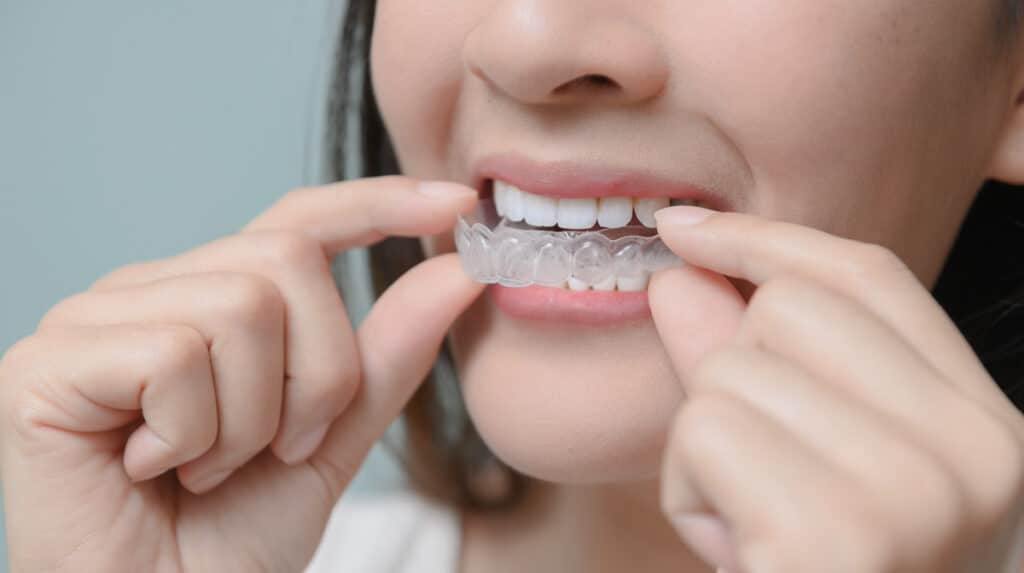
The next stage is the main part where you get and wear your aligners. You’ll get a series of clear aligners, each designed to slightly adjust the position of your teeth. These aligners are changed regularly and need to be worn as your dentist or orthodontist advises to keep your treatment progressing as it should.
In some cases, extra aligners are needed after the initial series of aligners to make further adjustments and improve the final result so that the teeth are aligned as intended.
Once teeth have moved into their expected positions according to the treatment plan, the active treatment phase is considered finished. After this, retainers are provided to help maintain the results and keep teeth in place, reducing the risk of them shifting over time.
Invisalign attachments
Invisalign attachments are small, tooth-coloured shoes that are temporarily bonded to certain teeth during treatment to help the aligners grip the teeth more effectively and allow for more precise and controlled movement.
Attachments may be needed in cases where more complex tooth movement is needed, like rotating teeth or moving them vertically. It’s not something everyone will need and will depend on your individual treatment plan.
Also known as buttons, attachments are applied by the dentist using a safe dental adhesive and are shaped to match the design of the aligners. At the end of treatment, they are carefully removed, and the teeth are polished to restore a smooth surface.
When treatment may take longer than expected
In some cases, Invisalign treatment may take longer than originally planned. This can happen for a number of reasons relating to how the teeth respond and how closely the treatment plan is followed, including:
- Teeth not tracking as planned: Teeth not moving in line with what the dentist or orthodontist expected them to for each set of aligners, meaning adjustments are required
- Inconsistent aligner wear: Not being committed to wearing aligners for the recommended number of hours each day means teeth won’t move as quickly
- Case becoming more complex: The movements that are needed might simply be more than the dental professional treating you initially thought
- Refinement rounds: If these are needed after your initial course of aligners, this will add time
- Delays: whether it’s delays in appointments, changing aligners as scheduled, or something else, these all extend the overall Invisalign timeline
While some delays are part of the normal process, following professional advice and making sure you follow the routine recommended to you can help reduce the risk of extended treatment time.
Can treatment be finished early?
In some cases, treatment may appear to be progressing ahead of schedule. Teeth might appear to have reached their desired position sooner than expected, especially in milder cases or where movement happens more quickly.
However, even if teeth look aligned, the underlying movement might still need time to stabilise. The full series of aligners have been carefully designed to guide teeth carefully into their final positions and support long-term results.
This is why it’s important to complete the full planned course of treatment as advised by your dental professional, as each stage plays a role in making sure the teeth are properly aligned and the bite is functioning as intended.
Ending treatment early because teeth look like they are now aligned can increase the risk of the teeth shifting back or not settling correctly. As well as affecting the appearance and overall outcome, it could even lead to the need for further treatment later on.
Alternatives to Invisalign treatment
While Invisalign is a popular option for straightening teeth and is suitable for many people, other orthodontic treatments might be recommended in certain situations.
Traditional fixed braces are recommended for more complex cases, including significant crowding, large bite issues, or movements that require very precise control. Because fixed braces are attached to the teeth, they can apply constant force, making them more effective for certain difficult adjustments.
If your case needs fixed braces, but you would like them to be more discreet, ceramic braces are less noticeable and still offer the level of control your teeth need.
Lingual braces can also be an option for those who need fixed braces but want them to be hidden. They are sometimes offered in complex cases, but are not suitable for every situation.
Ultimately, the most appropriate treatment option depends on how much tooth movement is needed, how complex the bite is, and what will deliver the best results whilst meeting patients’ needs and expectations.
Explore Invisalign treatment today
For those considering Invisalign treatment, a professional assessment is key to understanding whether this is going to be a suitable option for them and, if so, how their personalised plan would be structured.
At Fulham Road Dental, our Invisalign treatment is tailored to each individual patient, designed to support each stage of care and help guide patients through the process from start to finish.
With Invisalign, your dream smile can be achieved through a treatment process that offers comfort, discretion, and long-term results.
FAQs
How often are Invisalign aligners changed?
Invisalign aligners are typically replaced according to a schedule set by your dentist or orthodontist. In most cases, this is every one to two weeks, with each new set designed to continue the gradual movement of the teeth. The timing is carefully planned to keep treatment progressing in a controlled way.
The exact change schedule can differ from person to person. It may be adjusted depending on how your teeth are moving and how well the aligners are fitting. Your dental professional may recommend a different timing than you are used to, if needed, to help ensure the treatment stays effective and on track.
What factors does a dentist consider when recommending Invisalign?
A dentist considers several factors when recommending Invisalign, including how straight or crowded the teeth are and whether there are gaps or bite issues that need correction. They will also look at how complex the required tooth movements are and whether aligners are suitable for achieving the desired results in a controlled way.
They may also assess oral health, such as gum condition and tooth stability, as well as the patient’s ability to follow instructions. Consistency in wearing aligners is important, so lifestyle and commitment are also taken into account when deciding if Invisalign is the most suitable treatment option overall.
Do I have to wear retainers after Invisalign treatment?
Retainers are usually needed after Invisalign treatment to help keep your teeth in their new positions. Once the active treatment stage finishes, teeth can slowly start to shift back over time. Retainers help prevent this movement and support long-term results. Your dentist will explain how often they should be worn based on your individual case.
In most cases, retainers are worn regularly at first and then often continued at night only. The exact routine can vary depending on your treatment plan and how your teeth respond after Invisalign. Following advice from your dentist is important to maintain a stable, lasting smile.